About
- Our Hours
- Our History
- Our Crew
- Contact Us
- Campaigns
- Basic Needs Reports
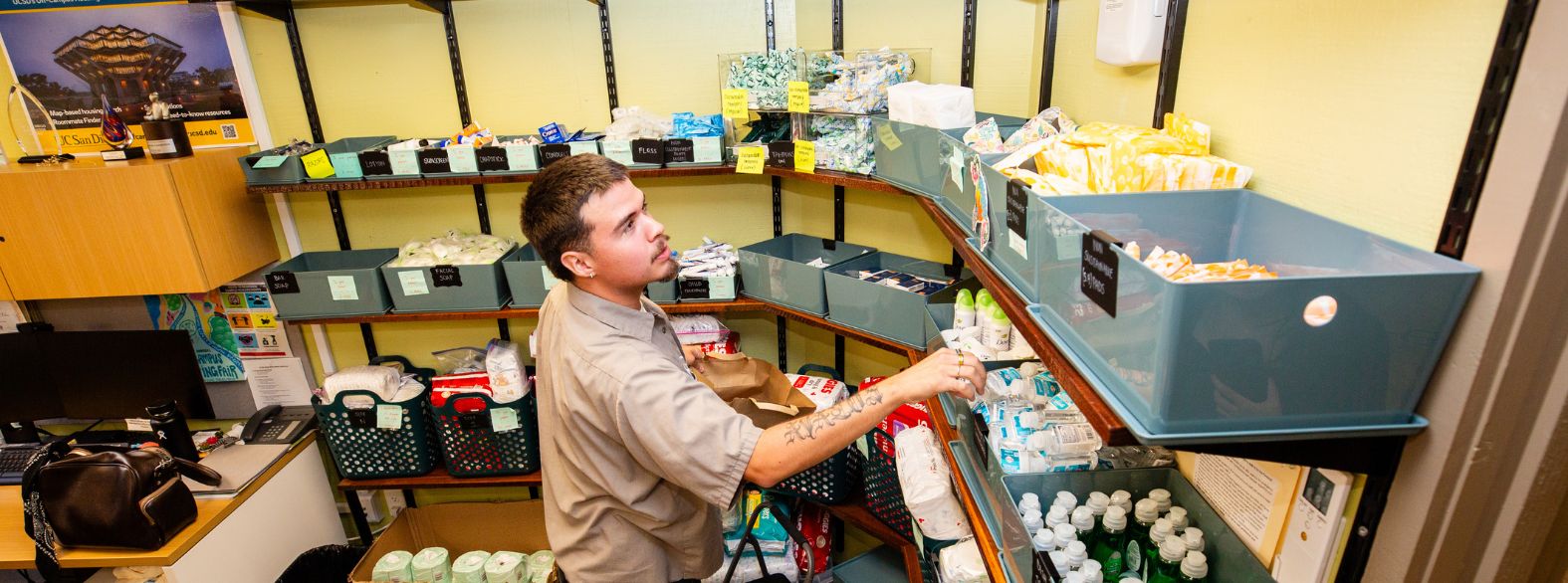


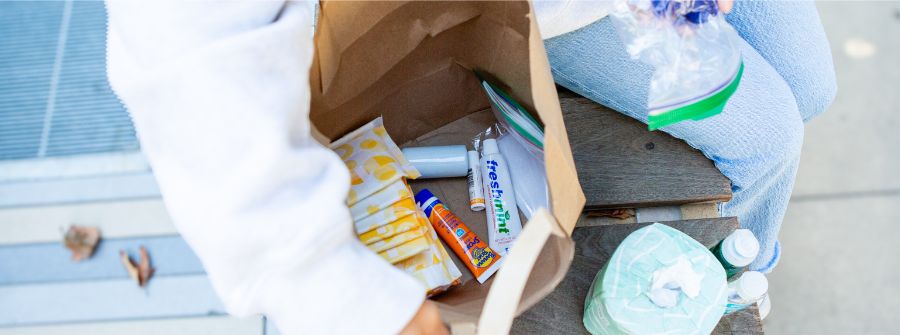


The Hub Basic Needs Center has a deep and rich history. A space that stems from student advocacy, community , and generations of student leadership, all for one cause. To support students at UC San Diego get their basic human rights met.
The University of California Office of the President (UCOP) has a system wide basic needs website dedicated to uplifting systemwide efforts for basic need security.
Below, you will see a timeline of Basic Needs at UC San Diego each academic year!
During the 2014-2015 academic year, the University of California Experience Survey (UCUES) created awareness regarding food insecurity amongst students.
UC San Diego then convenes a Food Insecurity Workgroup including staff and students across campus.
The Triton Food Pantry officially opened in Winter 2015 with the support of Associated students, University Centers (UCEN), Housing, Dining, and Hospitality (HDH), and more.
In the 2015 and 2016 academic year, the UCSD campus connects to the UC Systemwide food insecurity best practices.
It was found that the needs for students spanned farther than just food insecurity and included housing insecurity.
This led to the establishment of Basic Needs Monthly Meeting that consisted of student leaders, campus representatives, and more to address the following:
In the 2016-2017 academic year, the new position for UC San Diego Basic Needs Coordinator was filled.
The San Diego county CalFresh connection was established.
During the 2017 academic year Fall quarter, the first Basic Needs students were hired.
The Hub Basic Needs Center was then launched, including the name, branding, and infrastructure setup.
From there, key programs were developed such as; Emergency Meal Assistance, CalFresh Clinics, and Food Recovery Distribution.
The Fresh Full Transportation Pilot program was then initiated, alongside the Basic Needs Innovation Grants.
The Hub began offering case management, referrals, and intake protocols. The Basic Needs Assistance Form and intake protocols centralized location for students to meet 1:1.
Later on The Hub partnered with the county and campus stakeholders (i.e.: Residentail, Retail and Supply Chain Services, RRSS, on campus markets) to expand CalFresh access and EBT availability.
In this time, housing security started to move into the Basic Needs Center, but it was in the works. Following that, for Undergraduate students whow ere closer to graduating UC San Diego, a proactive housing grant became available.
Once the 2018 and 2019 academic year arrived, the CalFresh outreach Staff was hired.
Housing support was further expanded to include resources such as emergency housing.
The CalFresh Outreach Grant was acquired and the Hub successfully co-wrote a CalRecycle Grant, securing in being part of the Califronia Higher Education CalFresh Outreach Contract.
In collaboration with the International Students and Engagement Office (ISEO) and Undocumented Student Services Center, the programs iTable and Yes!Food became available to address food security for those who are not eligible for CalFresh.
The Housing Transitions Coordinator position was then created.
The first annual "Stuff the Bus" event took place this year where staff took a shuttle parked outside of Ralphs and asked for donations to "stuff" the bus with food. The event was a collaboration with the Transportation Department and Associated Students (A.S.).
Then, with student advocacy, the Grocery Shuttle was established for students to have access to different food resources across La Jolla. A Grocery Shuttle Map was also created by students as a tool to support their peers with different grocery locations.
In the 2019-2020 academic year, the Memorandum of Understanding (MOU), Calfresh county worker embedded to be on campus then transitioned to virtual support.
At this time the Food Coordinator role was established.
As the pandemic hit, the Hub launched the COVID-19 Basic Needs Emergency Relief Fund and supported the Financial Crisis Response Team (FCRT). The Financial Crisis Response Team was created as a response to the COVID-19 pandemic.
The Basic Needs became considered an essential service during the pandemic.
The Basic Needs Committee was the recipient of the BEARL award received for "Promoting Individuality."
By the 2020 and 2021 academic school year, the Graduate and Family Pantry at the Graduate Housing opened in response to student advocacy from Graduate and Professional students requesting their own Food Pantry.
Throughout COVID-19, the pandemic showcased an increase in need from students, in regard to their basic needs on campus. This led to food delivery programs to be available for on and off-campus students.
The Basic Needs Center developed food delivery programs to be available for on and off-campus students. Additionally, a temporary mobile pantry was launched to create accessibility for emergency food resources for students living off-campus.
Once the 2021 and 2022 academic year arrived, the HUB launched a subsidized transitional housing and emergency hotel assistance. During this academic year, the center deepened partnerships with the city of San Diego, San Diego State University, and campus partners.
Two new positions were established which were the Housing & Education Assistant and CalFresh Program Coordinator.
Staff also started the Laptop Lending Program!
This year also marked the launch of the first educational campaign brought by the Off-Campus Housing Office.
At this time, the HUB had grocery card support available for students.
In the 2022 and 2023 academic year, the Laptop Lending Program transitioned to the Library to allow for more capacity for the Basic Needs Professional staff and to also help expand the basic needs ecosystem.
The HUB also pivoted the Lyft Emergency Transport program to help students with emergency rides or unexpected transportation needs.
During this time the Off-Campus Housing Office also piloted the Air BnB Program!
In the 2023 and 2024 academic year, the Basic Needs Center strengthened fiscal systems with monthly reviews and Student Life Business Office (SLBO) professional development to Basic Needs staff.
The HUB then advised the Swipe Out Hunger program alongside student leadership and Tech Lending transition.
During this time, the HUB was able to deepen collective impact through the new AVP Food and Housing partnership.
Many more expansions came this academic year including the system for the Basic Needs Assistance Forms (BNAF) for students to meet 1:1 for holistic support regarding their basic needs. Additionally, there was an expansion in qualitative and quantitative assessment efforts across all basic need services to humanize the work.
Efforts happened to standardize efforts in regard to basic needs with college representatives across all undergraduate colleges.
In this year, the Food Recovery Network had a record breaking poundage based on increased partnerships with San Diego Food Bank, Batch and Box, Salad Place, Farmers Market, and Sunshine Market.
Through collective impact, the CalFresh Communications Campaign was created. This resulted in more advocacy and marketing for CalFresh eligibility within academic classes.
In the last 2024 and 2025 academic year, the Ridge Walk Learning and Living Neighborhood (RWNLLN) planning took place and was in the process of being established!
Expanded financial wellness efforts with University Credit Union.
Earned CalFresh Impact and NASPA APIKC Allyship Awards.
Collaborated with International Refugee Assistance Project (IRAP)/ Assessment, Evalucation & Organizational Development (AEOD) to launch a campus-wide Basic Needs dashboard.
Collective Impact for the CalFresh Marketing Campaign- Dr. Nancy Binkin, Adjunct Professors, Richard Garfein and Herbert Wertheim School of Public Health Human Longevity Science, their research found a gap amongst CalFresh eligible students and students receiving funding. The Executive Vice Chancellor convened a campus work group and committee to increase applications for CalFresh.
Established and developed multiple Food Recovery Network (FRN) re-diversion partnerships both on campus and within the greater San Diego community, effectively reducing food waste and increasing food resource distributions.
Successfully expanded operational and programmatic services for the Triton Food Pantry by extending hours to Saturdays, significantly increasing accessibility for students. Led strategic procurement partnerships with major vendors, including Costco and Foodshed Cooperative, increasing pantry food items and increasing sustainability commitments.
Partnership with Undocumented Student Services- Personal and Career Experience (PACE) Fellowship Program allowed the Hub to host 5 PACE fellows.
Supported Swipe out Hunger in the supervision to support longevity of the program for food security.
Launched the "Basic Rights, Human Right: Collective Responsibility" 2024 Educational Campaign Fall 2024. Collaboration consisted of 11 campus partners, over 200 attendees to tabling events, and over 303,000 views on Instagram.
Created an assessment for the Basic Needs Emergency Grant since the pandemic.